
Garmin Forerunner 165 vs Fitbit Charge 6: Which Fits Your Routine?
Forerunner 165 is the documented fit if you want a daily suggested workout presented from the watch’s Run activity; it requires an estimated VO₂ max and updates with training habits, recovery, and VO₂ max. Charge 6 also has documented training feedback: Cardio Load with a daily target, an in-app intensity map after outdoor GPS exercise, and Google Health Premium tools including Daily Readiness and recommended workouts. These are different workflows, not proven equivalents or a test of coaching results.
Published by Pickoryx · Published 2026-10-18
Source checked 2026-10-18 12:08 UTC
Products compared

Product A · ASIN B0CT3SGHXL
Garmin Forerunner 165 Running Smartwatch
Last observed offer
$197.94 List Price: $249.99
Per listed package.
Offer eligibility must be confirmed on Amazon.
Checked 2026-10-19 09:43 UTC. Price and availability may change.
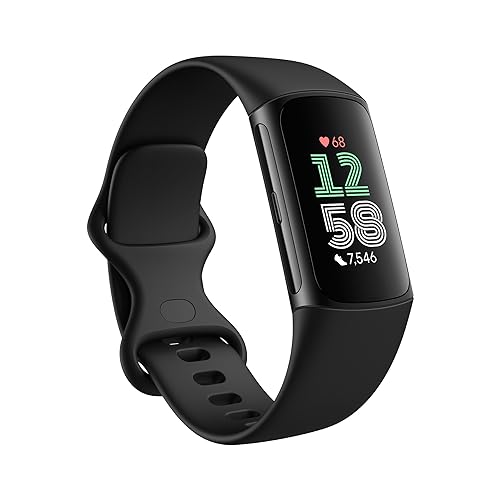
Product B · ASIN B0CC62ZG1M
Fitbit Charge 6 Fitness Tracker, Obsidian/Black
Last observed offer
$132.00 List Price: $159.95
Per listed package.
Offer eligibility must be confirmed on Amazon.
Checked 2026-10-19 10:44 UTC. Price and availability may change.
Pickoryx may earn a commission from qualifying purchases through the paid Amazon links on this page, at no added cost to you.
The buying question
Do you want a daily suggested workout surfaced in the Forerunner’s Run activity, or Charge 6’s cardio-load/readiness feedback and app-based workout tools, with some features listed under Google Health Premium?
Garmin documents an on-watch Run daily suggestion that requires an estimated VO₂ max and updates with training habits, recovery time, and VO₂ max. Google documents Charge 6 Cardio Load targets, post-GPS workout-intensity feedback, and Premium readiness/coaching tools. The pages describe different workflows and do not establish equivalence or comparative training results.
Quick verdict
Choose Garmin Forerunner 165 Running Smartwatch if
- You want Garmin’s on-watch Run suggestion and understand its VO₂ max estimate prerequisite.
- You prefer a watch interface with touchscreen navigation plus five named physical controls.
Choose Fitbit Charge 6 Fitness Tracker, Obsidian/Black if
- You prefer the Charge 6 tracker format and its stated 36.73 × 23.09 × 11.20 mm dimensions.
- You want its documented Cardio Load target and post-GPS in-app intensity map; check Premium terms if Daily Readiness or coaching is important.
When the recommendation changes
- If you need a particular prescribed run-session workflow, verify that the currently documented features match the workouts you want; this comparison does not equate a cardio-load target or coaching prompt with Garmin’s on-watch Run suggestion.
- If your deciding factor is GPS or heart-rate accuracy, seek an applicable controlled test for both exact models; feature documentation does not establish accuracy superiority.
The differences that matter
Running Training Workflow
Garmin Forerunner 165 Running Smartwatch
In the Run activity, a daily suggested workout appears; an estimated VO₂ max is required first, and suggestions update with training habits, recovery time, and VO₂ max.[2]
Fitbit Charge 6 Fitness Tracker, Obsidian/Black
Google documents 40+ exercise modes and built-in GPS for pace and distance without a phone. It also documents a Cardio Load daily target based on cardio load and readiness, plus an in-app Workout Intensity Map after outdoor GPS exercise showing pace and heart-rate zones. Google lists Daily Readiness Score as available with Google Health Premium and describes recommended workouts based on that score within Premium. These are readiness/load feedback and app-based workout guidance; the public page does not establish that they are equivalent to Garmin's Run daily-suggested-workout flow.[4]
What this changes: The documented paths differ in what they present: Garmin surfaces a daily suggested workout inside Run after a VO₂ max estimate, while Google documents Charge 6 cardio-load/readiness feedback, a post-GPS intensity map, and Premium coaching/recommended workouts. They are not established as equivalent plans or compared for effectiveness.[2, 4]
Display And Controls Form Factor
What this changes: Buyers who prefer physical multi-button navigation on a running watch can favor the Forerunner’s documented interaction model; buyers who prefer a tracker form and the Charge 6’s stated size can favor its format. These facts do not prove comfort, visibility, or ease-of-use superiority.[3, 1, 5, 4]
Best for your routine
A runner who wants a daily suggested workout surfaced from the Forerunner 165 Run activity and can meet its VO₂ max estimate prerequisite.
Best fit: Garmin Forerunner 165 Running Smartwatch
Based on listed features, not comparative testing.
The Forerunner manual documents this on-watch workflow and its update inputs. Charge 6 documents Cardio Load/readiness feedback and Premium app-based guidance, which are not established here as the same kind of run workout. This is feature fit, not a training-results winner.
A buyer who prefers a tracker format and wants Charge 6 cardio-load feedback plus a post-workout map, with Premium features checked if needed.
Best fit: Fitbit Charge 6 Fitness Tracker, Obsidian/Black
Based on listed features, not comparative testing.
Google documents Charge 6 Cardio Load, an in-app Workout Intensity Map after outdoor GPS exercise, and Daily Readiness / coaching features under Google Health Premium. This does not establish equal workout prescription or effectiveness versus Garmin.
Value and trade-offs
One or both observed offers have eligibility conditions, so no unrestricted price difference is shown.
No live offer or price-history claim is used. If one costs more at checkout, decide whether its specific training workflow or device format is worth that current difference; this draft does not estimate a premium threshold.
Price evidence is unavailable for a timing recommendation. Check offers at purchase; this draft gives no purchase-timing recommendation.
Limitations
- No Pickoryx hands-on test was conducted.
- Garmin documents a daily suggested workout inside Run after an estimated VO₂ max is available. Google documents Charge 6 Cardio Load with a daily target, an in-app Workout Intensity Map after outdoor GPS exercise, and Google Health Premium readiness/coaching features. These pages do not establish that the workflows are equivalent or compare their training effectiveness.
- Google currently lists Daily Readiness Score as available with Google Health Premium and describes recommended workouts based on that score in Premium; feature access and terms should be checked for the buyer’s account.
- Official feature descriptions do not compare GPS, step-count, heart-rate, sleep, or other real-world accuracy. The Tom’s Guide walk-count exercise found during discovery is an individual publisher test and is not used to generalize accuracy here.
- No comfort or fit conclusion is drawn from dimensions or weights. Try the device and band on your own wrist if fit is decisive.
- No medical advice, diagnosis, or treatment conclusion is offered.
- No live price, offer, shipping, stock, or membership-plan statement is included.
Questions shoppers ask
Does the Forerunner 165 suggest a daily running workout?
Garmin’s manual says a daily suggestion appears after you open Run; the watch needs an estimated VO₂ max first, and the suggestion updates with training habits, recovery time, and VO₂ max.
Does Charge 6 provide training feedback too?
Google documents Cardio Load with a daily target based on cardio load and readiness, plus an in-app Workout Intensity Map after outdoor GPS exercise. Google lists Daily Readiness Score as available with Google Health Premium and describes recommended workouts based on that score in Premium. These features are not shown to be equivalent to Garmin’s specific on-watch Run suggestion. Check current app feature terms; this article does not compare coaching effectiveness.
Can Charge 6 record pace and distance without a phone?
Google’s Charge 6 product page says its built-in GPS can show pace and distance on the wrist without a phone. This answers a feature question, not how its accuracy compares with Garmin.
Methodology and sources
Compared the Forerunner’s documented on-watch Run daily suggestion and Garmin’s VO₂ max prerequisite with Charge 6 Cardio Load/readiness feedback, its post-GPS workout-intensity map, and the Premium availability stated by Google. Separately compared documented display and control formats. No cross-device accuracy, comfort, or training-effectiveness test was conducted.
Research assistance helped find and organize official product pages and manuals; no device tests were performed.
View 5 sources
- 1.Forerunner 165 | Running WatchGarmin · Official specifications · Source checked 2026-10-18 12:01 UTC
Evidence used on this page
- Product identifier / part number 010-02863-20 in exact-SKU URL.: Garmin’s exact-SKU product page identifies the assigned Forerunner 165 part number. The JS-rendered specification panel was not text-extractable, so this page is used for model/SKU identity only; feature and control claims use the accessible Forerunner 165 Series manual.
- 2.Forerunner 165 Series Watch Owner’s Manual — Following a Daily Suggested WorkoutGarmin Support · Official support · Source checked 2026-10-18 12:01 UTC
Evidence used on this page
- “Following a Daily Suggested Workout,” lines 34–52 / manual v5 (June 2025).: The Forerunner 165 Series manual states that an estimated VO₂ max is required, the suggestion appears after selecting Run, and suggestions update automatically with training habits, recovery time, and VO₂ max. This is feature documentation, not outcome evidence.
- 3.Forerunner 165 Series Watch Owner’s Manual — OverviewGarmin Support · Official support · Source checked 2026-10-18 12:01 UTC
Evidence used on this page
- “Overview,” touchscreen and LIGHT/UP/DOWN/START·STOP/BACK controls, lines 34–85 / manual v5 (June 2025).: The manual identifies touch navigation and five named physical controls. It does not establish that this control style is easier, more comfortable, or more accurate.
- 4.Fitbit Charge 6 Premium Fitness TrackerGoogle Store · Official support · Source checked 2026-10-18 12:08 UTC
Evidence used on this page
- Fitness features: Cardio Load and daily target, lines 224–226; Daily Readiness Score Premium availability, lines 241–243; 40+ modes / built-in GPS, lines 246–265; Workout Intensity Map, lines 297–299; Premium recommendations/coaching, lines 470–500; display/navigation controls, lines 431–433 and 526–528.: Google’s US Charge 6 page lists Cardio Load and a daily target based on cardio load/readiness, an in-app post-GPS Workout Intensity Map, and a Daily Readiness Score available with Google Health Premium. Its Premium section describes personalized/adaptive coaching and recommended workouts based on the score. It also lists 40+ exercise modes and built-in GPS for pace/distance. These official descriptions do not establish equivalence to Garmin’s on-watch Run suggestion or comparative effectiveness.
- 5.Fitbit Charge 6 Technical SpecsGoogle Store · Official support · Source checked 2026-10-18 12:01 UTC
Evidence used on this page
- Color options, dimensions and weight, lines 43–56; display, lines 104–108.: Google lists Obsidian / Black Aluminum as a Charge 6 color and states dimensions 36.73 × 23.09 × 11.20 mm and 30 g. Dimensions are supplied as fit-selection context only and do not prove comfort or fit for any individual.