
Milwaukee 2836-20 vs 2426-20: Which Fits Your Setup?
Choose the 2836-20 if you already use M18 or specifically want Auto-Load and wrench-free accessory changes. Choose the 2426-20 if keeping your M12 setup matters more and you are comfortable using a hex wrench for changes. With neither system, budget for the matching battery and compatible charger before comparing value.
Published by Pickoryx · Published 2026-10-10
Source checked 2026-10-10 15:49 UTC
Products compared
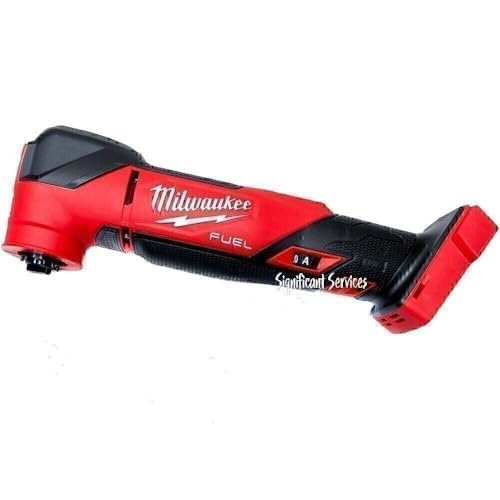
Product A · ASIN B09RXZXR4R
Milwaukee 2836-20 M18 FUEL Oscillating Multi-Tool (Bare Tool)
Last observed offer
$220.00
Per listed package.
Offer eligibility must be confirmed on Amazon.
Checked 2026-10-19 16:29 UTC. Price and availability may change.

Product B · ASIN B004M8R9VE
Milwaukee 2426-20 M12 Multi-Tool (Bare Tool)
Last observed offer
$91.29
Per listed package.
Offer eligibility must be confirmed on Amazon.
Checked 2026-10-19 16:29 UTC. Price and availability may change.
Pickoryx may earn a commission from qualifying purchases through the paid Amazon links on this page, at no added cost to you.
The buying question
Should you stay with your existing battery system, or choose the M18 tool for its control and accessory-change workflow?
Battery-system continuity versus the value you place on Auto-Load and wrench-free accessory changes.
Quick verdict
Choose Milwaukee 2836-20 M18 FUEL Oscillating Multi-Tool (Bare Tool) if
- You want the documented Auto-Load option and lever-and-bolt accessory routine.
Choose Milwaukee 2426-20 M12 Multi-Tool (Bare Tool) if
- You have M12 power equipment and do not mind the documented hex-wrench procedure.
When the recommendation changes
- You have neither battery system: compare complete ready-to-work purchases, not bare-tool prices alone.
- You already own both systems: accessory handling and control become the deciding questions.
The differences that matter
Battery Platform And Startup Requirements
What this changes: Start with your battery inventory. Owning the matching pack and a charger approved for it avoids buying another power system; owning only the other platform does not make either bare tool ready to use.[1, 3, 2, 4]
Auto Load And Accessory Change Workflow
What this changes: Choose the 2836-20 for its documented Auto-Load option and wrench-free changes. Choose the 2426-20 if its dial-and-wrench routine suits you. Neither procedure removes the need to disconnect the battery, clean mating parts and check accessory fit.[1, 3, 2, 4]
Best for your routine
An M18-equipped workshop adding a multi-tool
Best fit: Milwaukee 2836-20 M18 FUEL Oscillating Multi-Tool (Bare Tool)
Based on listed features, not comparative testing.
The 2836-20 fits the existing M18 battery platform; verify your charger against the battery instructions.
An M12 owner who accepts wrench-based accessory changes
Best fit: Milwaukee 2426-20 M12 Multi-Tool (Bare Tool)
Based on listed features, not comparative testing.
The 2426-20 stays on M12 while providing the documented manual speed and accessory routine.
Value and trade-offs
One or both observed offers have eligibility conditions, so no unrestricted price difference is shown.
Compare the tool plus any missing battery, compatible charger, job-specific accessories and adapters. A bare-tool price gap can understate the cost of entering another platform.
There is not enough verified price history here for a purchase-timing recommendation.
Limitations
- This comparison uses the US 2836-20 and 2426-20 bare tools. Confirm the seller’s exact included contents; kit photographs are not a packing list. The 2836-20 accessory pack was not established by the opened product-page text.
- Use only the battery and charger combination approved in their manuals. M12 and M18 tool batteries are different systems. The tool’s DC voltage does not establish a charger’s AC input or suitability for travel.
- No hands-on comparison establishes cutting speed, vibration, runtime or longevity here. Neither voltage, a FUEL label nor an oscillation-rate specification proves a measured advantage.
- For either tool, remove the battery before changing accessories and use only recommended accessories. Secure the workpiece and check for concealed wires and pipes before blind or plunge cuts. Wear the eye protection specified by the manual and appropriate respiratory protection or use an OSHA-compliant dust-extraction solution in dusty work. Remove nail and screw heads before scraping.
Questions shoppers ask
Can I reuse all my existing oscillating-tool blades?
Do not assume universal fit. Match each blade’s arbor to the relevant manual’s chart and obtain an adapter where required. The 2426-20 page lists a wood blade, sanding pad and five sheets; that does not cover every intended material.
Does Auto-Load guarantee a more accurate cut?
No comparative accuracy result is established here. Milwaukee documents a setting that starts slower and increases speed under load; treat that as a control choice, while following the manual’s workpiece, pressure and accessory instructions.
Methodology and sources
Matched the bare-tool models, battery requirements and documented operating procedures, then separated feature fit from unverified performance.
AI-assisted research organized the documented features and buying considerations; Pickoryx did not test these tools.
View 4 sources
- 1.Milwaukee 2836-20 M18 FUEL Oscillating Multi-ToolMilwaukee Tool · Official specifications · Source checked 2026-10-10 15:49 UTC
Evidence used on this page
- Product Overview and feature bullets: Exact 2836-20; M18 battery compatibility, battery not included, Auto-Load and tool-free blade change.
- 2.Milwaukee 2426-20 M12 Multi-Tool (Tool Only)Milwaukee Tool · Official specifications · Source checked 2026-10-10 15:49 UTC
Evidence used on this page
- Product Overview and feature bullets: Exact 2426-20; battery sold separately; variable-speed operation; wood blade, sanding pad and five sheets.
- 3.Milwaukee 2836-20 operator manualMilwaukee Tool · Official specifications · Source checked 2026-10-10 15:49 UTC
Evidence used on this page
- Printed pages 2–4: Specifications, Assembly, Selecting Speed, safety rules: M18 battery/charger type; Auto-Load setting; quick-release lever and hand-tightened bolt; adapter and safety requirements.
- 4.Milwaukee 2426-20 operator manualMilwaukee Tool · Official specifications · Source checked 2026-10-10 15:49 UTC
Evidence used on this page
- Printed pages 3–5: Specifications, Changing Accessories, Starting/Stopping and safety rules: M12 battery/charger type; speed dial; 5 mm hex wrench; optional adapters; safe use requirements.