
Nikon Z 50mm f/1.8 S vs Z 85mm f/1.8 S: Choose by Framing, Space, and Filter Setup
Pick by angle of view and shooting space, then check carry and filter fit. Nikon lists a wider angle for the 50mm and a tighter angle for the 85mm in both FX and DX formats. The 50mm is 55g lighter and 12.5mm shorter; its filter thread is 62mm versus 67mm. Both lenses are f/1.8 primes, and no optical-performance winner is established here.
Published by Pickoryx · Published 2026-10-02
Source checked 2026-10-02 13:32 UTC
Products compared
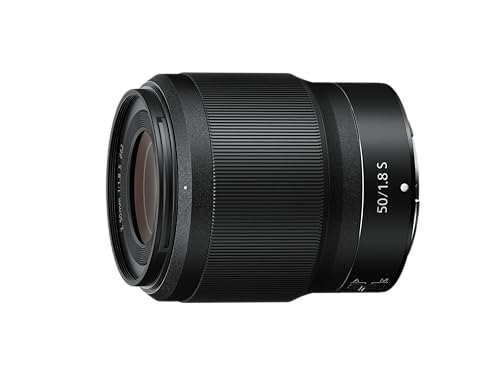
Product A · ASIN B07GQ6FR5F
Nikon NIKKOR Z 50mm f/1.8 S (U.S. model 20083)
Last observed offer
$466.95 List Price: $566.95
Per listed package.
Checked 2026-10-19 17:39 UTC. Price and availability may change.

Product B · ASIN B07VQWGNHR
Nikon NIKKOR Z 85mm f/1.8 S (U.S. model 20090)
Last observed offer
$746.95 List Price: $849.95
Per listed package.
Checked 2026-10-19 16:40 UTC. Price and availability may change.
Pickoryx may earn a commission from qualifying purchases through the paid Amazon links on this page, at no added cost to you.
The buying question
Which focal length and physical setup fit the portraits or everyday scenes you make and the room you have to shoot?
The 50mm gives a wider view and is lighter and shorter, with a 62mm filter thread. The 85mm gives a tighter view, is slightly heavier and longer, and uses a 67mm filter thread. Both are f/1.8 primes; these specifications do not establish an image-quality winner.
Quick verdict
Choose Nikon NIKKOR Z 50mm f/1.8 S (U.S. model 20083) if
- You want the wider view from your available camera position or often shoot where you cannot step farther back.
- A lighter, shorter lens and a 62mm filter thread better match your kit.
Choose Nikon NIKKOR Z 85mm f/1.8 S (U.S. model 20090) if
- You want the narrower view for your framing and have room to increase camera-to-subject distance as needed.
- You already use 67mm filters or prefer that thread size, and accept the lens’s added weight and length.
When the recommendation changes
- The camera format changes the stated angle of view: Nikon lists both FX and DX values, so compare the value for the camera format you use.
- If you need to reframe from a fixed position without moving, neither fixed-focal-length prime zooms.
- If image sharpness, autofocus behavior, or bokeh is the deciding factor, these specifications do not provide a matched comparison test.
The differences that matter
Framing And Working Distance
Nikon NIKKOR Z 50mm f/1.8 S (U.S. model 20083)
Nikon identifies the NIKKOR Z 50mm f/1.8 S as a fixed-focal-length 50mm lens with maximum angle of view 47°00′ on FX and 31°30′ on DX; maximum aperture f/1.8.[1]
Nikon NIKKOR Z 85mm f/1.8 S (U.S. model 20090)
Nikon identifies the NIKKOR Z 85mm f/1.8 S as a fixed-focal-length 85mm lens with maximum angle of view 28°30′ on FX and 18°50′ on DX; maximum aperture f/1.8.[2]
What this changes: For the same camera format, a 50mm focal length records a wider angle than an 85mm from the same position; to keep the same subject framing with the longer focal length, the camera generally needs more distance from the subject. This describes framing geometry only, not tested portrait quality.[1, 2]
Carry And Filter Workflow
Nikon NIKKOR Z 50mm f/1.8 S (U.S. model 20083)
Approximate weight 415g, length 86.5mm, screw-in filter size 62mm.[1]
Nikon NIKKOR Z 85mm f/1.8 S (U.S. model 20090)
Approximate weight 470g, length 99mm, screw-in filter size 67mm.[2]
What this changes: By subtraction, the 50mm is about 55g lighter and 12.5mm shorter. The 62mm versus 67mm thread size changes which filter directly matches each lens; it may matter when a buyer already owns filters in one of those sizes.[1, 2]
Best for your routine
Environmental portraits or indoor scenes where including more of the surroundings from the current camera position matters.
Best fit: Nikon NIKKOR Z 50mm f/1.8 S (U.S. model 20083)
Based on listed features, not comparative testing.
The 50mm has the wider listed angle of view on the same camera format, which suits a framing goal where stepping farther back is limited. Choose it for composition, not a claim of better image quality.
Tighter portraits when there is room to move back and frame the subject with less surrounding scene.
Best fit: Nikon NIKKOR Z 85mm f/1.8 S (U.S. model 20090)
Based on listed features, not comparative testing.
The 85mm has the narrower listed angle of view. If you want the same subject framing, allow more camera-to-subject space; no portrait rendering or bokeh superiority is claimed.
Keeping a lighter and shorter prime in the bag or using a 62mm filter directly.
Best fit: Nikon NIKKOR Z 50mm f/1.8 S (U.S. model 20083)
Based on listed features, not comparative testing.
Nikon lists the 50mm at about 415g and 86.5mm long with a 62mm filter thread, compared with about 470g, 99mm, and 67mm for the 85mm.
Using a 67mm filter thread already represented in your kit, while accepting a slightly heavier and longer lens.
Best fit: Nikon NIKKOR Z 85mm f/1.8 S (U.S. model 20090)
Based on listed features, not comparative testing.
The 85mm uses a 67mm screw-in filter size; check your existing filter setup and any adapter needs before choosing around that size.
Value and trade-offs
The offers shown are per listed package; check the quantities and current terms on Amazon before comparing totals.
At any current price gap, weigh the tighter 85mm view and your 67mm filter setup against its added size and weight. These specifications do not establish an image-quality premium.
No price-history window informs timing here; compare the offers available when you purchase.
Limitations
- This is a specifications-based framing and physical-setup comparison. Neither lens was physically tested, and no matched sharpness, autofocus, portrait rendering, bokeh, flare, or low-light results are established.
- The working-space guidance follows the listed focal lengths and angles of view for the same camera format and a chosen subject framing. Minimum-focus-distance specifications are not treated as portrait working-distance measurements.
- Nikon lists the 50mm at f/1.8 and the 85mm at f/1.8. Equal maximum-aperture labels do not establish equal optical performance or background rendering.
- No price history, verified offer comparison, U.S. search-volume data, or conversion data was used.
Questions shoppers ask
Which lens shows more of the scene?
The 50mm. Nikon lists its maximum angle of view as 47°00′ on FX and 31°30′ on DX. The 85mm is tighter at 28°30′ on FX and 18°50′ on DX. Compare the figures for your camera format.
Does the 85mm require more room for the same framing?
Plan on more camera-to-subject space if you want the same subject framing: the 85mm’s narrower view needs a farther camera position for that composition. That is separate from a lens’s minimum-focus distance, which is not the portrait working distance discussed here.
Do both lenses have the same maximum aperture?
Yes. Nikon lists f/1.8 for both, so maximum aperture does not distinguish this pair. That shared specification does not establish a winner for sharpness, autofocus, bokeh, or low-light results.
What filter sizes do they use?
The 50mm uses a 62mm screw-in filter; the 85mm uses a 67mm screw-in filter. If you already own filters, compare your actual setup with those thread sizes before choosing.
Methodology and sources
Compared the exact Nikon U.S. product pages for focal length, FX/DX angle of view, approximate dimensions and weight, and filter-thread size. Same-framing distance guidance is a conditional implication of focal length and angle of view on the same camera format, not a measured test. Closest-focus distances were not used as a substitute for portrait working distance. No optical-quality winner is claimed.
AI-assisted research and drafting; neither lens was physically tested.
View 2 sources
- 1.NIKKOR Z 50mm f/1.8 S | Mirrorless Interchangeable LensNikon USA · Official specifications · Source checked 2026-10-02 13:32 UTC
Evidence used on this page
- Nikon U.S. product page, Tech Specs lines 84-114, 118-159, 189-214. Identifies the 50mm f/1.8 S and gives FX/DX angles, filter size, length and weight.: Nikon lists a 50mm f/1.8 Z-mount prime compatible with FX and DX; maximum angles of view 47°00′ (FX) and 31°30′ (DX); 62mm screw-in filter; approximate dimensions 76 x 86.5mm and weight 415g.
- 2.NIKKOR Z 85mm f/1.8 S Lens | Fast Mirrorless Portraits LensNikon USA · Official specifications · Source checked 2026-10-02 13:32 UTC
Evidence used on this page
- Nikon U.S. product page, Tech Specs lines 92-122, 126-167, 193-214. Identifies the 85mm f/1.8 S and gives FX/DX angles, filter size, length and weight.: Nikon lists an 85mm f/1.8 Z-mount prime compatible with FX and DX; maximum angles of view 28°30′ (FX) and 18°50′ (DX); 67mm screw-in filter; approximate dimensions 75 x 99mm and weight 470g.