
Panasonic RF-2400D vs Midland ER310PRO: AM/FM Listening or NOAA Monitoring?
Choose the Panasonic RF-2400D for manually tuned AM/FM listening with four AA cells or its supplied US AC cord. Choose the Midland ER310PRO when dedicated NOAA reception and alert standby matter, or when planned USB-C charging suits you better. Verify local NOAA reception and enable the correct mode before relying on that function.
Published by Pickoryx · Published 2026-10-06
Source checked 2026-10-06 21:41 UTC
Products compared

Product A · ASIN B00007KDX6
Panasonic RF-2400D (US)
Last observed offer
$34.99
Per listed package.
Offer eligibility must be confirmed on Amazon.
Checked 2026-10-19 19:01 UTC. Price and availability may change.
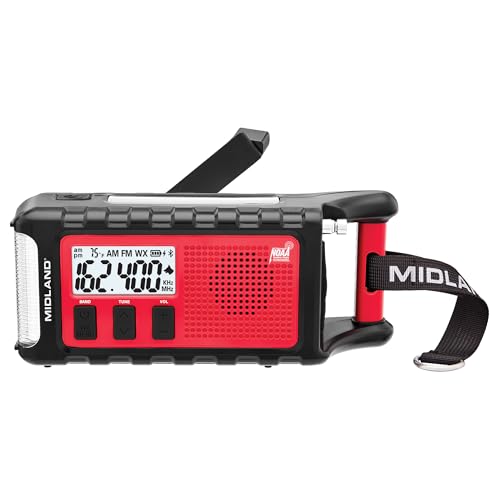
Product B · ASIN B0FX3GFYJP
Midland ER310PRO
Last observed offer
$99.99
Per listed package.
Offer eligibility must be confirmed on Amazon.
Checked 2026-10-19 12:59 UTC. Price and availability may change.
Pickoryx may earn a commission from qualifying purchases through the paid Amazon links on this page, at no added cost to you.
The buying question
Do you need dedicated NOAA weather monitoring, and do you prefer replacing AA cells or recharging a battery pack?
Panasonic pairs manually tuned AM/FM reception with AA cells or its supplied AC cord. Midland adds NOAA weather standby and uses a rechargeable pack with USB-C and supplemental charging inputs.
Quick verdict
Choose Panasonic RF-2400D (US) if
- AM/FM covers your listening needs.
- You prefer stocking the specified AA cells or using the supplied 120 V cord.
Choose Midland ER310PRO if
- You need NOAA weather-band reception and will configure and check its alert standby.
- You prefer recharging and understand that solar/crank inputs are supplemental.
When the recommendation changes
- A local NOAA transmitter cannot be received clearly at the intended location.
- You cannot keep the rechargeable pack charged or maintain suitable replacement AA cells.
- Your decision depends on a proven reception, runtime or alert-reliability advantage, which this comparison does not establish.
The differences that matter
Broadcast Band And Alert Workflow
Panasonic RF-2400D (US)
Manually select AM or FM and turn the tuning knob. The documented ranges are AM 520–1710 kHz and FM 87–108 MHz.[2]
What this changes: Choose Panasonic for ordinary AM/FM listening. Choose Midland if receiving the dedicated NOAA band and enabling its alert standby are requirements. That NOAA band is outside Panasonic’s documented two-band range.[2, 3, 4]
Battery Replenishment And Power Setup
Panasonic RF-2400D (US)
Uses four specified R6/LR6 AA dry cells, sold separately, or the supplied 120 V / 60 Hz AC cord. Disconnect the cord from both the wall and radio for dry-cell use.[2]
What this changes: Choose Panasonic if stocking and replacing AA cells suits your routine. Choose Midland if you prefer planned recharging and accept maintaining the battery; do not treat crank or solar inputs as unlimited listening time.[2, 3, 4]
Best for your routine
AM/FM listening with replaceable dry cells
Best fit: Panasonic RF-2400D (US)
Based on listed features, not comparative testing.
Panasonic documents this power and tuning routine. AA cells are not included, and the AC cord must be disconnected for battery operation.
Dedicated NOAA weather monitoring
Best fit: Midland ER310PRO
Based on listed features, not comparative testing.
Midland documents the NOAA channels and enabled standby mode. The buyer must check a clear local broadcast and transmitter status; no reception test was performed here.
A radio maintained through routine USB-C charging
Best fit: Midland ER310PRO
Based on listed features, not comparative testing.
Midland documents that charging input. Plan the charging supply and storage maintenance rather than counting on indefinite solar or crank operation.
Value and trade-offs
One or both observed offers have eligibility conditions, so no unrestricted price difference is shown.
Pay more only for the broadcast and power arrangement you will maintain. A weather-radio label or larger battery claim does not establish greater safety or dependable reception at your address.
There is not enough price history here to recommend buying now or waiting.
Limitations
- Neither radio was tested hands-on. Reception, alert delivery, audio quality, runtime and emergency reliability are not ranked, and no all-hazards coverage or safety guarantee is made.
- Panasonic prohibits exposure to rain, moisture and splashes and instructs unplugging during lightning storms. Follow the battery polarity and type instructions; do not charge alkaline or manganese cells.
- Midland requires dry storage and avoiding extreme heat or cold. Its guidance calls for periodic recharging when stored; solar and crank inputs do not remove that responsibility.
- Midland’s owner page calls its pack replaceable, while its FAQ says it is not user-replaceable and also contains replacement wording. Ask Midland before attempting battery service. Published runtime and output-port descriptions also conflict; this comparison excludes pack-replacement procedures, runtime rankings and phone-charging promises.
- This covers the US RF-2400D identified by Panasonic’s RF-2400 support page and the selected ER310PRO package, not the base ER310 or other regional radios.
Questions shoppers ask
Does buying a NOAA radio automatically enable alerts?
No. Midland’s instructions require finding a clear local weather broadcast and enabling Weather Alert mode. Check the National Weather Service station and outage information, then verify reception at the intended location. We have not tested an alert there.
Can the Panasonic receive the same NOAA channel by turning its dial?
Its documented AM/FM ranges do not reach the 162.400–162.550 MHz NOAA weather band. An AM/FM broadcast and dedicated NOAA reception are different listening paths; this comparison does not assess what your local AM/FM stations broadcast.
Can Midland’s crank and solar panel replace routine charging?
The owner instructions describe both as maintenance charging rather than a primary power source. Use its supported USB-C charging routine and maintain the stored battery; no crank-time-to-listening-time equivalence is assumed here.
Methodology and sources
Compared documented broadcast bands and alert setup separately from battery replenishment. Kept source conflicts and local-reception requirements explicit.
AI helped organize the manufacturer information and draft this comparison. Neither radio was tested hands-on.
View 5 sources
- 1.Panasonic RF-2400 Product SupportPanasonic · Official specifications · Source checked 2026-10-06 21:39 UTC
Evidence used on this page
- Product Guide; Manuals and Specifications; Owner’s Manual link: The US RF-2400 support page directly links the RF-2400D instruction sheet used here, establishing the model naming connection.
- 2.Panasonic RF-2400D US Owner’s ManualPanasonic · Official specifications · Source checked 2026-10-06 21:37 UTC
Evidence used on this page
- Page 1: safeguards and supplied cord; page 2: power, listening and specifications: The two-page TQBM0271-1 guide names RF-2400D, specifies AM/FM reception, four AA dry cells or 120 V / 60 Hz AC, and gives battery and moisture precautions. It carries a 2017 copyright and 2018 production footer.
- 3.Midland ER310PRO Owner’s ManualMidland · Official specifications · Source checked 2026-10-06 21:32 UTC
Evidence used on this page
- Power Sources; Battery Charging; Weather Radio Operation; Maintenance and Storage: The model-specific page describes weather-band alert standby, USB-C charging from 5 V DC and supplemental solar/crank charging. Its battery-replacement and output-port statements are inconsistent, so those procedures are excluded. Page updated March 18, 2026.
- 4.Midland ER310PRO Frequently Asked QuestionsMidland · Official specifications · Source checked 2026-10-06 21:38 UTC
Evidence used on this page
- Power and Battery; Weather Radio; Maintenance and Storage: Documents seven NOAA channels, enabling standby alerts, USB-C charging and dry storage. It tells owners to contact Midland about battery replacement despite other contradictory replacement wording. Page updated March 18, 2026.
- 5.NOAA Weather Radio Station DirectoryNational Weather Service · Official support · Source checked 2026-10-06 21:38 UTC
Evidence used on this page
- Find My Station; coverage and outage links: Provides official station, coverage and transmitter-status resources for checking the intended NOAA listening location. This is service information, not a test of the Midland receiver.