
TP-Link RE315 vs RE550: Which Extender Fits Your Network Setup?
The RE550 is the specification-fit option when its Gigabit Ethernet port or higher listed band-rate ceilings match your setup; the RE315 can fit when its AC1200-class figures and 10/100 port meet the need. TP-Link labels the rates as maximum physical rates and says actual throughput and coverage vary, so this is not a speed or range test.
Published by Pickoryx · Published 2026-10-19
Source checked 2026-10-19 05:04 UTC
Products compared
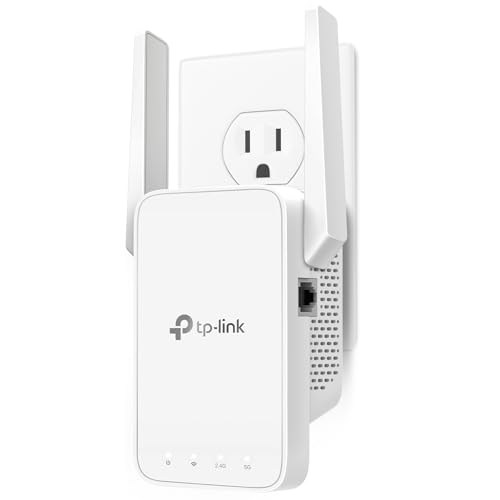
Product A · ASIN B08RHD97QY
TP-Link RE315 AC1200 Mesh Wi-Fi Range Extender
Last observed offer
$22.97 List Price: $29.99
Per listed package.
Checked 2026-10-19 13:50 UTC. Price and availability may change.

Product B · ASIN B08TLT65WM
TP-Link RE550 AC1900 Wi-Fi Range Extender
Last observed offer
$39.99 List Price: $49.99
Per listed package.
Checked 2026-10-19 14:08 UTC. Price and availability may change.
Pickoryx may earn a commission from qualifying purchases through the paid Amazon links on this page, at no added cost to you.
The buying question
Do the RE550’s higher published dual-band rate figures and Gigabit Ethernet port matter for your router, clients or wired link, or do the RE315’s listed rates and 10/100 port fit?
The RE550 has higher manufacturer-listed per-band maximum rates and a Gigabit Ethernet interface; the RE315 has lower listed rates and a 10/100 interface. Neither predicts actual coverage or throughput in a particular home.
Quick verdict
Choose TP-Link RE315 AC1200 Mesh Wi-Fi Range Extender if
- Your router/client needs fit the RE315’s published 300 Mbps (2.4 GHz) and 867 Mbps (5 GHz) ceilings, and 10/100 Ethernet is adequate.
- You do not need a Gigabit-capable Ethernet interface; compare current offers separately because price timing was not evaluated.
Choose TP-Link RE550 AC1900 Wi-Fi Range Extender if
- A Gigabit Ethernet port matters for a wired endpoint or AP connection, and the rest of that path supports the intended rate.
- Your compatible router and clients make the RE550’s published 600 Mbps (2.4 GHz) and 1,300 Mbps (5 GHz) ceilings relevant; they do not guarantee those rates in use.
When the recommendation changes
- If the router or clients cannot use the higher listed rates, that rating alone may not change practical fit. Any wired path also depends on the router/switch, cable, endpoint and service.
The differences that matter
Listed Wifi Class And Band Rates
TP-Link RE315 AC1200 Mesh Wi-Fi Range Extender
TP-Link's U.S. RE315 page lists AC1200 with maximum rates of 300 Mbps at 2.4 GHz and 867 Mbps at 5 GHz.[1]
TP-Link RE550 AC1900 Wi-Fi Range Extender
TP-Link's U.S. RE550 page lists AC1900 with maximum rates of 600 Mbps at 2.4 GHz and 1,300 Mbps at 5 GHz.[2]
What this changes: Compare these published band ceilings with the buyer’s router and clients; they do not establish actual speed, coverage or a universal performance advantage.[1, 2]
Wired Port And Access Point Link Fit
TP-Link RE315 AC1200 Mesh Wi-Fi Range Extender
The RE315 U.S. specifications list one 10/100 Mbps Ethernet port and Range Extender/Access Point working modes.[1]
TP-Link RE550 AC1900 Wi-Fi Range Extender
The RE550 U.S. specifications list one Gigabit Ethernet port and Range Extender/Access Point working modes.[2]
What this changes: The RE550 interface has a higher stated link-rate ceiling; router/switch, cable and endpoint must also support it. Both models list AP mode, so mode alone is not a difference.[1, 2]
Best for your routine
A wired endpoint or AP link where a 10/100 port would be the limiting interface
Best fit: TP-Link RE550 AC1900 Wi-Fi Range Extender
Based on listed features, not comparative testing.
The RE550 lists Gigabit Ethernet while the RE315 lists 10/100 Mbps. This is a port-specification fit, not a tested end-to-end result; the rest of the path must also support the intended rate.
A setup whose clients fit the RE315 published rate ceilings and that does not need a Gigabit Ethernet interface
Best fit: TP-Link RE315 AC1200 Mesh Wi-Fi Range Extender
Based on listed features, not comparative testing.
The RE315 listed rates and 10/100 interface may meet that stated requirement. This does not establish better value, actual Wi-Fi speed or coverage; current prices were not compared.
Value and trade-offs
The offers shown are per listed package; check the quantities and current terms on Amazon before comparing totals.
Any current price premium for the RE550 should be weighed against a specific need for its Gigabit Ethernet interface or higher published band-rate ceilings; those features do not establish a real-world speed or coverage advantage.
There is no price-timing assessment in this comparison.
Is the upgrade worth it?
Worth considering if
- A buyer who needs a Gigabit-capable wired port or whose supported router/client setup can use the RE550’s higher listed band-rate ceilings.
Skip the upgrade if
- The RE315 listed rates and 10/100 port already meet the setup; no price-based upgrade value is claimed.
Limitations
- The exact U.S. hardware revision represented by either retail ASIN was not established by the public sources opened. TP-Link’s U.S. support pages list multiple RE315 and RE550 revisions; check the unit label and matching local documentation before relying on revision-specific firmware or features.
- The U.S. product pages list AC1200/AC1900 band-rate figures as maximum physical rates derived from IEEE 802.11. TP-Link says actual throughput and coverage are not guaranteed and vary with environment, network conditions and client limitations.
- A Gigabit port does not guarantee Gigabit end-to-end throughput. Cable, router/switch, client, extender mode and service capacity also affect the path; no independent speed, range, latency or reliability testing was performed.
- No current offer comparison or price-history window was evaluated. No Buy Now/Wait recommendation is made.
Questions shoppers ask
Does AC1900 mean the RE550 will deliver 1,900 Mbps to one device?
No. TP-Link lists 600 Mbps at 2.4 GHz and 1,300 Mbps at 5 GHz as maximum physical rates. Its page says actual throughput and coverage are not guaranteed and vary by environment, network conditions and client limitations. The combined class is not a measured single-client internet-speed result.
Can the RE315 be used as an access point?
TP-Link lists Range Extender/Access Point modes for the RE315. Its Ethernet interface is 10/100 Mbps; the RE550 also lists AP mode and has a Gigabit port. Pick by the wired interface you need, not an assumed coverage result.
Will the RE550 improve speed in a weak-signal room?
The higher published rate ceilings alone cannot answer that. TP-Link says actual throughput and coverage vary with placement, obstacles, interference, network conditions and client capability. This comparison has no controlled range or throughput measurements.
Methodology and sources
Compared the U.S. product pages’ listed band-rate figures, Ethernet interfaces and working modes, then checked U.S. support pages for revision listings. Maximum wireless rates are physical-rate ceilings, not measured results.
Research assistance helped locate and organize manufacturer product and support pages; no devices were tested.
View 4 sources
- 1.RE315 | AC1200 Mesh Wi-Fi Range ExtenderTP-Link · Official specifications · Source checked 2026-10-19 05:04 UTC
Evidence used on this page
- Specifications: Interface, Signal Rate, Working Modes; Support footnote on maximum signal rates and actual throughput/coverage; accessed 2026-10-19 UTC.: U.S. RE315 page lists one 10/100 Mbps Ethernet port, Range Extender/Access Point modes, 300 Mbps at 2.4 GHz and 867 Mbps at 5 GHz. Its footnote says maximum wireless rates are IEEE 802.11 physical rates and actual throughput/coverage vary; see support for version information.
- 2.RE550 | AC1900 Wi-Fi Range ExtenderTP-Link · Official specifications · Source checked 2026-10-19 05:04 UTC
Evidence used on this page
- Specifications: Interface, Signal Rate, Working Modes; Support footnote on maximum signal rates and actual throughput/coverage; accessed 2026-10-19 UTC.: U.S. RE550 page lists one Gigabit Ethernet port, Range Extender/Access Point modes, 600 Mbps at 2.4 GHz and 1,300 Mbps at 5 GHz. Its footnote gives the same physical-rate and actual-throughput/coverage caution and points to support for version information.
- 3.Download for RE315 V1 | TP-LinkTP-Link · Official support · Source checked 2026-10-19 05:04 UTC
Evidence used on this page
- Hardware-version selector, download notes and manual list; accessed 2026-10-19 UTC.: The U.S. support page offers RE315 V1, V1.60 and V1.80 choices and says to verify hardware version and use the support site for the purchase region. It does not identify which revision is represented by the retail listing discussed here.
- 4.Download for RE550 V1 | TP-LinkTP-Link · Official support · Source checked 2026-10-19 05:04 UTC
Evidence used on this page
- Hardware-version selector, download notes and manual list; accessed 2026-10-19 UTC.: The U.S. support page offers RE550 V1, V1.40 and V1.60 choices and says to verify hardware version and use the support site for the purchase region. It does not identify which revision is represented by the retail listing discussed here.