
TP-Link Roam 7 vs GL.iNet Opal: Which Fits Your Setup?
Choose by connection layout: the Opal lists two LAN ports, while the Roam 7 lists one 1 Gbps LAN port and a 2.5 Gbps WAN. The Roam 7’s WAN rating matters only if your setup specifically requires that interface with compatible upstream service and equipment; a client on its 1 Gbps LAN has no demonstrated speed benefit from the WAN rating. For a travel case with tight internal limits, check the stated body dimensions against your usable space before buying.
Published by Pickoryx · Published 2026-09-28
Source checked 2026-09-28 15:39 UTC
Products compared

Product A · ASIN B0FHZGXZH7
TP-Link Roam 7 (TL-WR3602BE)
Last observed offer
$89.98 List Price: $129.99
Per listed package.
Checked 2026-10-19 19:23 UTC. Price and availability may change.
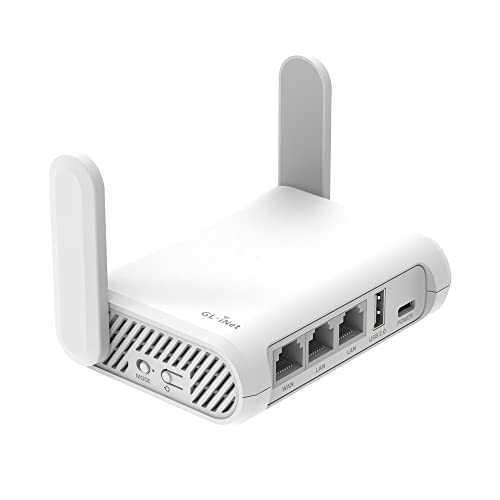
Product B · ASIN B09N72FMH5
GL.iNet Opal (GL-SFT1200)
Last observed offer
$39.99
Per listed package.
Offer eligibility must be confirmed on Amazon.
Checked 2026-10-19 17:39 UTC. Price and availability may change.
Pickoryx may earn a commission from qualifying purchases through the paid Amazon links on this page, at no added cost to you.
The buying question
Which router fits the traveler’s wired-device layout and available case space?
The Opal lists two 1 Gbps LAN ports and lower values across its three listed body measurements; the Roam 7 lists one 1 Gbps LAN port and a 2.5 Gbps WAN. The WAN rating is relevant only when the buyer specifically requires that interface with compatible upstream service and equipment; it does not establish a speed benefit for a client connected to the 1 Gbps LAN.
Quick verdict
Choose TP-Link Roam 7 (TL-WR3602BE) if
- Your setup specifically requires a 2.5 Gbps WAN interface and compatible upstream service and equipment. A client connected to the Roam 7’s 1 Gbps LAN has no demonstrated speed benefit from that WAN rating.
Choose GL.iNet Opal (GL-SFT1200) if
- You need two wired clients connected directly to LAN ports without adding a separate switch.
- The Opal’s listed body measurements meet your case limits and the Roam 7’s do not; confirm the dimension orientation and antenna clearance if the fit is close.
When the recommendation changes
- If you need two direct LAN clients, the Opal’s second LAN port can remove the need for a separate switch. Choose the Roam 7’s WAN interface only when your setup specifically requires a 2.5 Gbps WAN connection with compatible upstream service and equipment; this does not establish faster service for a client on its 1 Gbps LAN port.
- For a fixed case limit, compare the listed dimension sets with usable internal space and confirm orientation or antenna clearance if the fit is close.
The differences that matter
Wired Port Topology And Uplink Role
TP-Link Roam 7 (TL-WR3602BE)
One 2.5 Gbps WAN port and one 1 Gbps LAN port.[1]
GL.iNet Opal (GL-SFT1200)
One 1 Gbps WAN port and two 1 Gbps LAN ports.[2]
What this changes: The Opal lists one additional direct LAN connection. The Roam 7 supplies a listed 2.5 Gbps WAN interface when that interface is specifically required and compatible upstream service/equipment are present; this does not establish faster wired service for a client on its 1 Gbps LAN. Neither port listing establishes measured throughput.[1, 2]
Body Dimensions For Travel Packing Fit
TP-Link Roam 7 (TL-WR3602BE)
126 × 93.5 × 36 mm (manufacturer-listed body dimensions).[1]
GL.iNet Opal (GL-SFT1200)
118 × 85 × 30 mm (manufacturer-listed body dimensions).[2]
What this changes: A buyer with fixed internal storage limits can compare the published measurements with available space. The values alone do not establish dimension orientation, antenna clearance, included-accessory fit, or a practical portability winner.[1, 2]
Best for your routine
Two wired clients connected directly to router LAN ports
Best fit: GL.iNet Opal (GL-SFT1200)
Based on listed features, not comparative testing.
The Opal lists two 1 Gbps LAN ports; the Roam 7 lists one. This is a port-count fit, not a speed or performance result.
A setup that specifically requires a 2.5 Gbps WAN interface
Best fit: TP-Link Roam 7 (TL-WR3602BE)
Based on listed features, not comparative testing.
The Roam 7 lists a 2.5 Gbps WAN interface and the Opal lists a 1 Gbps WAN interface. This is a match to an explicitly required interface rating, not a downstream speed claim; a client on the Roam 7’s 1 Gbps LAN has no demonstrated speed benefit from the WAN rating.
Router body must fit a specific travel case or shelf limit
The better fit depends on your priorities
Compare the listed body measurements with the case’s usable internal space; confirm orientation and antenna clearance when fit is close. The measurements do not guarantee physical fit or include accessories.
Value and trade-offs
One or both observed offers have eligibility conditions, so no unrestricted price difference is shown.
Any price difference should be weighed against the second direct LAN port, a 2.5 Gbps WAN interface only if your setup specifically requires it, or the body measurements that matter to your setup; no price premium is assumed to be worthwhile.
There is not enough price history to say when to buy. Compare the current offers and conditions when you are ready to purchase.
Limitations
- No hands-on speed, range, or packing test was performed. These are manufacturer-listed interface ratings and body dimensions, not measured results.
- The 2.5 Gbps figure is the Roam 7 WAN port rating; it does not make its LAN port 2.5 Gbps or guarantee faster internet. Compatible upstream service and equipment are needed. A client connected to the 1 Gbps LAN has no demonstrated speed benefit from the WAN rating.
- Use the listed body dimensions only as an initial check against your case’s usable internal space. Confirm dimension orientation and antenna clearance where fit is tight; included cables/adapters are not covered by the body measurements.
- The Opal’s installed firmware is unknown. Portal-login and firmware-version behavior are not used to rank the routers.
- Current offers can change; no buy-now or wait recommendation is made.
Questions shoppers ask
Does the Roam 7’s 2.5 Gbps WAN make its wired LAN connection 2.5 Gbps?
No. The listed 2.5 Gbps port is the Roam 7’s WAN connection; the router lists one 1 Gbps LAN port. If your only wired client connects through that LAN port, the WAN rating does not demonstrate a faster wired connection. Actual internet throughput also depends on compatible upstream service and equipment.
Can I tell from these dimensions whether either router will fit my travel pouch?
Use the stated body measurements for an initial check against the pouch’s usable internal dimensions. Confirm measurement orientation and antenna clearance if space is tight; the dimensions do not include cables or adapters.
Methodology and sources
Compared the listed Ethernet port roles and router-body dimensions for the Roam 7 and Opal. Recommendations are conditional feature-fit guidance; no performance winner is claimed.
AI assistance researched and drafted the comparison; no physical router, port, speed, or packing test was performed.
View 2 sources
- 1.TL-WR3602BE TP-Link Roam 7 BE3600TP-Link · Official specifications · Source checked 2026-09-28 15:08 UTC
Evidence used on this page
- Connectivity/ports and product dimensions; 2.5G usage compatibility caveat: The US product page lists one 2.5 Gbps WAN and one 1 Gbps LAN port, plus body dimensions 126 × 93.5 × 36 mm. The page says use of the 2.5 Gbps connection requires compatible service and equipment. It does not provide measured throughput or establish bag fit.
- 2.Opal GL-SFT1200GL.iNet · Official specifications · Source checked 2026-09-28 15:08 UTC
Evidence used on this page
- Ethernet ports and product specifications/dimensions: The manufacturer page lists one 1 Gbps WAN and two 1 Gbps LAN ports and body dimensions 118 × 85 × 30 mm for Opal GL-SFT1200. The page view used a non-US store/plug selection, so these device-model specifications do not establish US package contents or measured performance.