
Which CPU fits your games and the motherboard you already own?
For gaming under TechSpot's November 2024 45-game test conditions—1080p with a GeForce RTX 4090—the measured average favored the 9800X3D by 24%. The Core Ultra 9 285K can still make practical sense if you already own a supported LGA1851/Intel 800-series board and accept that test's gaming tradeoff to reuse your platform. These CPUs use different sockets, so switching between them requires a different motherboard.
Published by Pickoryx · Published 2026-10-23
Source checked 2026-10-23 04:20 UTC
Products compared
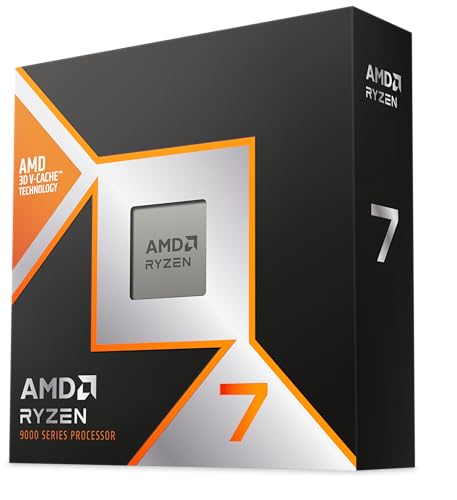
Product A · ASIN B0DKFMSMYK
AMD Ryzen 7 9800X3D
Last observed offer
$444.00 List Price: $479.00
Per listed package.
Offer eligibility must be confirmed on Amazon.
Checked 2026-10-31 13:41 UTC. Price and availability may change.

Product B · ASIN B0DFKC99VL
Intel Core Ultra 9 285K
Last observed offer
$509.59
Per listed package.
Offer eligibility must be confirmed on Amazon.
Checked 2026-10-31 15:41 UTC. Price and availability may change.
Pickoryx may earn a commission from qualifying purchases through the paid Amazon links on this page, at no added cost to you.
The buying question
Which of these exact processors better fits the buyer's gaming workload and current motherboard platform?
TechSpot's dated 1080p/GeForce RTX 4090 test favored the 9800X3D for gaming; a buyer who already owns a supported LGA1851/Intel 800-series board may still prefer the 285K to reuse that board, accepting the cited gaming tradeoff. AM5 and LGA1851 are separate platforms.
Quick verdict
Choose AMD Ryzen 7 9800X3D if
- Gaming is your main workload and TechSpot's dated 1080p/RTX 4090 results are relevant to your game mix; its measured 45-game average favored the 9800X3D.
- Your exact AM5 motherboard lists the 9800X3D as supported with the BIOS version you have or can install.
Choose Intel Core Ultra 9 285K if
- You already own an exact, supported LGA1851/Intel 800-series board and want to reuse it, accepting that TechSpot's dated 1080p/RTX 4090 gaming test favored the 9800X3D; that test does not establish current performance for your game mix.
When the recommendation changes
- The buyer's own resolution, graphics card, game mix, game versions, operating system, firmware and memory settings differ from TechSpot's November 2024 test.
- The exact motherboard CPU-support list or required BIOS version rules out the processor the buyer hoped to reuse it with.
The differences that matter
Gaming Workload Fit
AMD Ryzen 7 9800X3D
TechSpot reported a 24% average performance lead across its 45-game comparison and 29% better average 1% lows for the 9800X3D.[1]
Intel Core Ultra 9 285K
The Core Ultra 9 285K was the direct comparison CPU in the same article; results varied by game and the article reported an Easy Anti-Cheat issue that prevented its test system from running Fortnite at publication.[1]
What this changes: A direct 2024 test gives gaming buyers a concrete comparison, while its exact test conditions and title-specific variation limit how far the average can be generalized.[1]
Existing Motherboard Platform Fit
AMD Ryzen 7 9800X3D
AMD identifies the 9800X3D as AM5 and lists supported chipset families; the product page identifies boxed product ID 100-100001084WOF.[2]
What this changes: The distinct platform requirements mean the buyer's existing supported motherboard can change the practical choice. Neither source confirms BIOS readiness for a specific board.[2, 3, 4]
Best for your routine
Gaming under conditions similar to the named 1080p/GeForce RTX 4090 test
Best fit: AMD Ryzen 7 9800X3D
TechSpot's direct pair test reported a 24% 45-game average advantage and a 29% average advantage in 1% lows for the 9800X3D. These are that article's 2024 measurements, not an estimate for other system configurations or current software.
Reusing an existing supported LGA1851/Intel 800-series motherboard when avoiding a board replacement matters most
Best fit: Intel Core Ultra 9 285K
Based on listed features, not comparative testing.
If you already own a supported LGA1851/Intel 800-series board, choosing the 285K can avoid replacing that board. That platform-fit reason may justify it if you accept the cited TechSpot test, which favored the 9800X3D under its November 2024 1080p/GeForce RTX 4090 conditions; it does not claim a current gaming advantage for the 285K.
Value and trade-offs
One or both observed offers have eligibility conditions, so no unrestricted price difference is shown.
Compare the current verified offers and the full platform cost for the exact supported board, memory and cooling setup. No price premium is asserted in this article.
Insufficient price history prevents a reliable Buy Now or Wait recommendation. Recheck current offers and platform costs at purchase time.
Limitations
- The performance evidence is an independent article published November 20, 2024. Its CPU gaming tests used 1080p and a GeForce RTX 4090; results may differ at other resolutions, with other GPUs, game selections, patches, operating systems, firmware or memory settings.
- TechSpot reported that its 285K system could not run Fortnite because of an Easy Anti-Cheat compatibility issue at publication. This article does not establish whether that issue remains current.
- No productivity or creator-workload comparison, long-term reliability evidence, thermals or power-consumption comparison is used to recommend one CPU.
- Socket and chipset compatibility does not verify a particular motherboard revision, CPU support list, BIOS version, cooler fit or system configuration. Check the board maker's exact documentation.
- Both processors use DDR5 memory; memory type alone does not distinguish this pair. Board-specific memory support and settings can vary.
- No price-history coverage was available and current offers were not assessed for this decision; no historical-low, savings or purchase-timing claim is made.
Questions shoppers ask
Does the 9800X3D always run games 24% faster than the 285K?
No. The 24% average is TechSpot's result across its November 2024 test set at 1080p with a GeForce RTX 4090. The article reports that margins varied by title and included GPU-limited games. Treat it as evidence for that test, then look for testing that matches your own games and settings.
Can I keep my current motherboard if I switch between these CPUs?
No. These CPUs use different platforms: the 9800X3D uses AM5, while the 285K uses LGA1851 with Intel 800-series chipsets. Switching between them requires a different motherboard. For an upgrade within one platform, check the exact board maker's CPU-support list and required BIOS version before buying.
Does DDR5 settle this choice?
No. Both support DDR5, so memory type by itself is not a distinction. Check the exact motherboard's memory support and settings as part of the full build.
Methodology and sources
Compared the named 9800X3D and 285K in TechSpot's published 45-game test and checked their exact product identities and platform requirements against AMD and Intel pages. Recommendations stay within those source scopes.
Research assistance was used to locate and compare published manufacturer specifications and independent test results. No Pickoryx benchmark or hands-on testing was performed.
View 4 sources
- 1.AMD Ryzen 7 9800X3D vs. Intel Core Ultra 9 285K | 45 Game BenchmarkTechSpot · Independent testing · Source checked 2026-10-23 04:20 UTC
Evidence used on this page
- Title/byline/date; introduction/test conditions; game results; 45 Game Average; What We Learned: Steven Walton's November 20, 2024 direct comparison reports a 45-game average 24% performance lead and 29% better average 1% lows for the 9800X3D. CPU gaming tests used 1080p and a GeForce RTX 4090; the article says margins vary by game and describes a Fortnite/Easy Anti-Cheat issue preventing the 285K system from running that title at publication.
- 2.AMD Ryzen 7 9800X3D Desktop ProcessorAMD · Official specifications · Source checked 2026-10-23 04:20 UTC
Evidence used on this page
- General Specifications: name, boxed processor, cores/threads, AM5 socket and supporting chipset list; Product IDs: boxed ID; Connectivity: DDR5 memory type: AMD identifies the 9800X3D boxed part and lists product ID 100-100001084WOF, AM5, supported chipset families and DDR5 system memory.
- 3.Intel Core Ultra 9 Processor 285K SpecificationsIntel · Official specifications · Source checked 2026-10-23 04:20 UTC
Evidence used on this page
- Processor Number 285K; Memory Specifications: DDR5; Package Specifications: FCLGA1851: Intel identifies the Core Ultra 9 285K, its FCLGA1851 socket and DDR5 memory support.
- 4.Information About Intel Core Ultra Boxed Desktop Processors (Series 2)Intel Support · Official support · Source checked 2026-10-23 04:20 UTC
Evidence used on this page
- Compatibility and socket section; last reviewed March 11, 2026: Intel states Series 2 desktop processors are not cross-compatible with older platforms and use LGA1851 with Intel 800-series chipsets.