
Nikon D7500 vs Nikon Z50 II: Keep F-Mount Lenses or Move to Z?
Keep the D7500 if direct F-mount use and its optical finder fit your routine; move to the Z50 II if the Z system and its documented 4K50/60 or internal 10-bit H.265 options matter more. Nikon also documents uncompressed 8-bit 4:2:2 HDMI output from the D7500 with simultaneous SD recording, while Z50 II external 10-bit output requires H.265 10-bit and a compatible recorder. Match the output to your recorder workflow; these specifications do not establish a footage-quality winner. The Z transition needs an adapter for F lenses.
Published by Pickoryx · Published 2026-10-02
Source checked 2026-10-02 04:39 UTC
Products compared
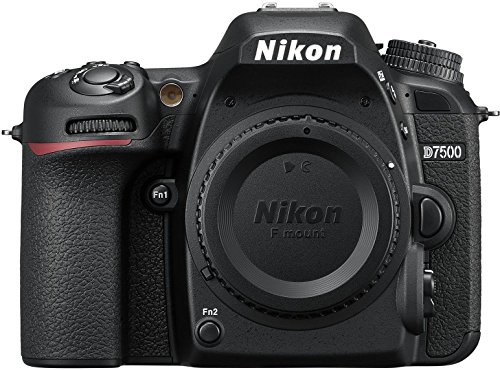
Product A · ASIN B06Y5ZCFHX
Nikon D7500 DX-Format Digital SLR Body
Last observed offer
$696.95 List Price: $999.95
Per listed package.
Offer eligibility must be confirmed on Amazon.
Checked 2026-10-19 17:39 UTC. Price and availability may change.

Product B · ASIN B0DMJBLQGP
Nikon Z50 II Mirrorless Camera Body
Last observed offer
$959.95 List Price: $1,009.95
Per listed package.
Offer eligibility must be confirmed on Amazon.
Checked 2026-10-19 16:41 UTC. Price and availability may change.
Pickoryx may earn a commission from qualifying purchases through the paid Amazon links on this page, at no added cost to you.
The buying question
Should you stay with the D7500's native F-mount DSLR workflow or move to the Z50 II's Z-mount mirrorless workflow, and how do their documented video modes fit your editing needs?
The D7500 accepts supported F lenses directly and uses an optical pentaprism finder; it also documents uncompressed 8-bit 4:2:2 external HDMI recording alongside SD recording. The Z50 II adds a native Z-mount path, electronic finder, higher listed 4K frame rates and internal 10-bit H.265, plus a conditional external 10-bit HDMI path; legacy F lenses require an adapter and specific compatibility checks.
Quick verdict
Choose Nikon D7500 DX-Format Digital SLR Body if
- You already own supported F-mount lenses and want to use them directly on the body.
- Your video delivery fits 4K30/H.264 internally or the D7500's documented external 8-bit 4:2:2 HDMI route.
Choose Nikon Z50 II Mirrorless Camera Body if
- You want native Z-mount lenses and an electronic viewfinder.
- You need listed 4K50/60 or internal 10-bit H.265, or a 10-bit HDMI path with a compatible recorder, and can work within the documented crop and electronic-VR limits.
When the recommendation changes
- The specific lenses you own have different AF or metering support through FTZ/FTZ II than expected.
- Your delivery target requires a particular frame rate, crop, codec, internal bit depth, or external-recorder format.
- A hands-on focus, handling, autofocus, or image-quality result is necessary to choose; this comparison has no matched tests.
The differences that matter
Lens Viewfinder Workflow
Nikon D7500 DX-Format Digital SLR Body
Native F mount and pentaprism optical viewfinder; the D7500 compatibility list includes AF NIKKOR G/E/D and other specified F-mount lens groups with restrictions.[1]
What this changes: Buy around your actual lens shelf: direct attachment is simpler on the D7500, while moving to Z can preserve use of many F lenses but adds an adapter and may change AF support. Check exact lens names against Nikon's compatibility table before choosing.[1, 3, 6]
Video Recording Workflow
Nikon D7500 DX-Format Digital SLR Body
4K UHD to 30p/25p/24p in MOV/MP4 with H.264; at 4K the D7500 uses a crop approximately 1.5× tighter than DX framing. Nikon also documents uncompressed 8-bit 4:2:2 4K UHD output to an external HDMI recorder while simultaneously recording to SD.[1, 2, 7]
Nikon Z50 II Mirrorless Camera Body
4K UHD up to 60p/50p in H.265 8/10-bit; these rates use a crop approximately 1.5× tighter than normal DX video and electronic VR is fixed off for the marked modes. With H.265 10-bit selected, HDMI output can be 4:2:2 10-bit when the external recorder supports it; output depends on recorder compatibility.[3, 4, 5]
What this changes: Match each camera's documented output to the delivery path rather than assuming a higher frame rate means better footage. D7500 offers 4K to 30p internally and an 8-bit 4:2:2 external HDMI route alongside SD recording. Z50 II lists additional 4K rates and internal 10-bit H.265; its 4K60/50 crop narrows framing and electronic VR is fixed off at those marked rates. Z50 II HDMI can output 4:2:2 10-bit with H.265 10-bit selected and a compatible recorder. These are different recording configurations, not matched quality results.[1, 2, 7, 3, 4, 5]
Best for your routine
Photographer with an existing supported F-mount lens collection who wants direct body mounting and an optical finder
Best fit: Nikon D7500 DX-Format Digital SLR Body
Based on listed features, not comparative testing.
D7500 has Nikon F mount and an optical pentaprism finder. Z50 II's F-lens route requires a separately available FTZ/FTZ II adapter and model-specific compatibility checks.
Video creator whose delivery calls for 4K50/60, internal 10-bit H.265, or a compatible-recorder 10-bit HDMI path and who has checked crop and stabilization constraints
Best fit: Nikon Z50 II Mirrorless Camera Body
Based on listed features, not comparative testing.
Z50 II lists 4K50/60 and internal 10-bit H.265, plus conditional 10-bit HDMI output; D7500 documents 4K up to 30p and 8-bit 4:2:2 HDMI output. Choose by required delivery mode and recorder compatibility, not an assumed footage-quality advantage.
Value and trade-offs
One or both observed offers have eligibility conditions, so no unrestricted price difference is shown.
A higher offer only makes sense if its mount transition, finder style or planned video modes solve a real need; compare current body-only offers and any required adapter separately.
Compare current checkout offers and include the cost of any needed adapter; the available pricing data does not support a timing conclusion.
Limitations
- This comparison covers published configuration and shooting workflow, not matched hands-on tests of image quality, autofocus, video detail, rolling shutter, heat or battery life.
- Nikon notes restrictions for lens compatibility; check each exact F-mount lens and required adapter against Nikon's current compatibility list before switching bodies.
- Nikon documents the crop and electronic-VR-off conditions for Z50 II 4K60/50; the crop status of its lower 4K rates was not resolved in the checked source table. The Z50 II external 10-bit output requires a compatible recorder and the selected H.265 10-bit format.
- Current offers, seller terms and adapter bundle contents can change; check the exact body-only package at checkout.
Questions shoppers ask
Will my D7500 F-mount lenses work on the Z50 II?
They cannot attach directly. Nikon requires a separately available FTZ or FTZ II adapter for F-mount lenses and warns that restrictions apply. Nikon lists autofocus and auto exposure with selected AF-P, AF-S and AF-I lens types; check each lens name and function in the adapter compatibility list before switching.
Does the Z50 II's 4K60 use the same framing as its 4K30?
Nikon specifically marks 4K60/50 as cropped to about 1.5× tighter than normal DX video and fixes electronic VR off at those modes. The sources checked here do not apply the same crop note to 4K30/25/24, so check the exact rate and field of view you plan to use.
Can I record 10-bit externally from both cameras?
No. Nikon documents uncompressed 8-bit 4:2:2 4K UHD HDMI output for the D7500 while it records simultaneously to its SD card. Z50 II can output 4:2:2 10-bit over HDMI when H.265 10-bit is selected and the connected recorder supports 10-bit. Check the recorder's resolution and frame-rate compatibility; these documented output formats alone do not establish a footage-quality winner.
Methodology and sources
Compared these U.S. camera bodies using Nikon's model specifications, camera manuals, lens-adapter support table, and documented video file/rate/crop/output conditions. Performance and image quality were not tested.
Automated tools assisted with source organization and drafting; this comparison reports documented setup options, not hands-on experience.
View 7 sources
- 1.D7500 | Digital SLR Cameras | Nikon ConsumerNikon · Official specifications · Source checked 2026-10-02 04:04 UTC
Evidence used on this page
- Specifications: lens mount and compatible lenses; viewfinder; movie frame sizes, format and compression; HDMI port: D7500 is a DX-format F-mount DSLR with a pentaprism optical viewfinder. Nikon lists compatibility with AF NIKKOR G/E/D, AI-P and non-CPU AI lenses in M mode, with stated restrictions. Movie modes include 4K UHD up to 30p, MOV/MP4 and H.264; the body has a Type C HDMI output.
- 2.Recording Movies | D7500 Online ManualNikon · Official specifications · Source checked 2026-10-02 04:04 UTC
Evidence used on this page
- Frame Size, Frame Rate, and Movie Quality; The Movie Crop: D7500 4K UHD modes are 30p/25p/24p, with maximum high-quality bitrate 144 Mbps and up to 29 min 59 sec per clip. 4K uses approximately 16.2 × 9.1 mm crop regardless of selected image area, with apparent focal length approximately 1.5× greater than DX; 1080/720 crops vary with the menu's image-area selection.
- 3.Z50II | Mirrorless Cameras | Nikon ConsumerNikon · Official specifications · Source checked 2026-10-02 04:04 UTC
Evidence used on this page
- Overview and specifications: mount, compatible lenses, image sensor, EVF, video modes, formats and interfaces: Z50II is a DX-format Z-mount mirrorless body with an electronic OLED viewfinder. Nikon lists Z lenses and F lenses with a separately available adapter subject to restrictions. Its video modes include UHD 4K to 60p/50p, MOV/MP4, H.265 8/10-bit and H.264 8-bit; Nikon identifies 4K/60p as cropped and the specifications list HDMI Type D output.
- 4.Video frame size and rate options | Z50II Reference GuideNikon · Official specifications · Source checked 2026-10-02 04:04 UTC
Evidence used on this page
- Video file type and frame-size/rate table, footnotes 2–4: Z50II's 4K 60p/50p/30p/25p/24p and Full HD 120p/100p modes require H.265 8/10-bit; H.264 8-bit supports Full HD up to 60p/50p and listed lower rates. The manual marks 4K60/50 as about 1.5× tighter than normal DX video and electronic VR fixed off for those marked modes; its table does not attach that same crop note to the lower 4K rates.
- 5.Recorders | Z50II Reference GuideNikon · Official specifications · Source checked 2026-10-02 04:04 UTC
Evidence used on this page
- YCbCr and bit depth; HDMI output and tone mode; external recording control: Z50II HDMI output is 4:2:2 10-bit when H.265 10-bit is selected and the connected recorder supports 10-bit; other file type choices output 8-bit. Output/frame-rate compatibility depends on the external recorder and selected mode.
- 6.Mount Adapter FTZ II | Accessories | Nikon ConsumerNikon · Official specifications · Source checked 2026-10-02 04:04 UTC
Evidence used on this page
- Overview; Supported Features table; Incompatible Lenses and Accessories: FTZ II mounts F lenses to Nikon Z bodies. Nikon lists AE with about 360 F lenses from AI type onward and AF/AE with 94 AF-P/AF-S/AF-I lens types; support differs by lens and mode, and Nikon lists incompatible lenses. The exact lens should be checked in Nikon's compatibility information before transition.
- 7.Nikon D7500 DSLR | 20.9 MP DX Format Digital SLR CameraNikon USA · Official specifications · Source checked 2026-10-02 04:39 UTC
Evidence used on this page
- 4K UHD Video Recording: Nikon states the D7500 records uncompressed 8-bit 4:2:2 4K UHD to an external HDMI recorder while simultaneously recording to the in-camera SD card; its 4K UHD recording is up to 30p.