
Nikon D780 vs D850: Which Full-Frame DSLR Fits Your Workflow?
The D850 is the feature-fit choice when you want more recorded pixels after a DX crop. The D780 fits a compatible external 10-bit HDMI workflow or a two-SD-card setup, but still photos cannot be taken while 10-bit output is selected. If 3840 × 2160 is also selected, Nikon states the angle of view is about 90% and the footage is not recorded to the camera cards. Neither specification set proves better real-world image quality or autofocus performance.
Published by Pickoryx · Published 2026-10-01
Source checked 2026-10-01 14:25 UTC
Products compared

Product A · ASIN B07524LHMT
Nikon D850 (US model 1585, body only)
Last observed offer
$1,996.95 List Price: $2,599.95
Per listed package.
Offer eligibility must be confirmed on Amazon.
Checked 2026-10-19 17:39 UTC. Price and availability may change.
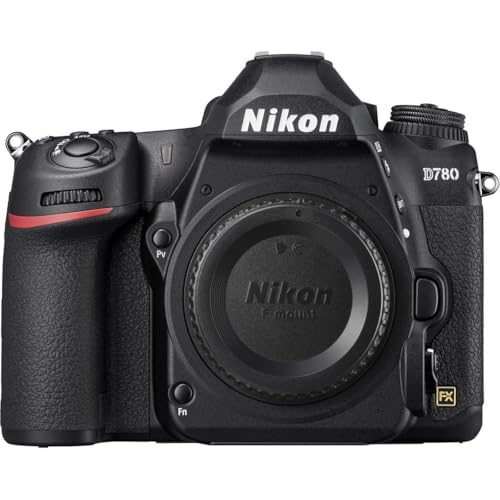
Product B · ASIN B083K41K2S
Nikon D780 (US model 1618, body only)
Last observed offer
$1,546.95
Per listed package.
Offer eligibility must be confirmed on Amazon.
Checked 2026-10-19 16:41 UTC. Price and availability may change.
Pickoryx may earn a commission from qualifying purchases through the paid Amazon links on this page, at no added cost to you.
The buying question
Do you need more still-image pixels for reframing, or a 10-bit external HDMI recording workflow and two SD card slots?
The D850 records more pixels in both FX and DX still-image areas and pairs XQD or firmware-enabled CFexpress Type B with SD; the D780 offers 10-bit HDMI output options for compatible external recording and uses two SD cards, but selecting 10-bit disables still photography; at 4K 10-bit, the angle of view is about 90% and movies are not saved to the camera cards.
Quick verdict
Choose Nikon D850 (US model 1585, body only) if
- You want a higher-resolution still file or more pixels remaining in the camera's listed DX image area.
- You already use XQD or CFexpress Type B alongside SD and are prepared to check the D850 firmware before buying.
Choose Nikon D780 (US model 1618, body only) if
- You plan to record 10-bit HDMI video externally with a compatible recorder and do not need to take still photos while 10-bit output is selected; N-Log and HLG require 10-bit output and are unavailable in EFCT mode. At 3840 × 2160, Nikon additionally states the angle of view is about 90% and footage is not saved to camera cards.
- You want both camera card slots to accept SD media.
When the recommendation changes
- If neither the higher still-image pixel counts nor the D780’s conditional external 10-bit video workflow changes your output, these specifications do not settle the purchase; compare the exact body-only offer terms and listed included items. If you need to take still photos while 10-bit HDMI output is selected, that D780 mode does not fit.
- If your buying decision depends on measured autofocus, image quality, or reliability superiority, seek comparable independent testing or long-term evidence; these official specifications do not establish a winner.
The differences that matter
Stills Output And Crop Budget
What this changes: The D850 retains more listed still-image pixels in FX and DX output; choose it when that larger output/crop budget is useful, without treating it as an image-quality test.[1, 3, 2, 4]
Live View Video And Card Workflow
Nikon D850 (US model 1585, body only)
Full-width 4K UHD at 24/25/30p; external 4:2:2 8-bit 4K UHD HDMI recording can occur while recording to a card. Slots: XQD plus UHS-II SD. Type B CFexpress support was added in C firmware 1.20.[1, 5, 6, 8]
Nikon D780 (US model 1618, body only)
Full-frame 4K UHD up to 30p; selectable 8- or 10-bit HDMI output, with N-Log/HLG available only at 10-bit in modes other than EFCT, recorded directly to an external device. No still photos can be taken while 10-bit output is selected. When 3840 × 2160 is selected at 10-bit, Nikon additionally states the angle of view is about 90% and movies are not recorded to the camera cards. Slots: two UHS-II SD.[2, 4, 7, 9]
What this changes: Choose by the recording path and media you can support: the D780 for its conditional external 10-bit options or two SD slots, only if you can accept that 10-bit output prevents still photos; when 4K 10-bit is selected, Nikon additionally specifies about a 90% angle of view and no in-camera-card movie recording. The D850 offers its published 4:2:2 8-bit external 4K path with simultaneous card recording or an XQD/CFexpress-plus-SD workflow.[1, 5, 6, 8, 2, 4, 7, 9]
Best for your routine
Keeping more still-image pixels when using the listed DX crop area
Best fit: Nikon D850 (US model 1585, body only)
Based on listed features, not comparative testing.
Nikon lists 19.4 million pixels for the D850's large DX-format image and 10.3 million for the D780's. This is a recorded-pixel comparison, not a measured image-quality result.
Recording 10-bit N-Log or HLG video through HDMI to a compatible external recorder, accepting no still-photo capture while 10-bit is selected and, for 4K, the about-90% angle of view and no-camera-card movie recording
Best fit: Nikon D780 (US model 1618, body only)
Based on listed features, not comparative testing.
Nikon documents this conditional D780 workflow with a compatible external recorder, 10-bit output, and non-EFCT mode for N-Log/HLG. The manual says no still photos can be taken while 10-bit output is selected. When 3840 × 2160 is also selected, Nikon additionally states the angle of view is about 90% and the camera cards do not record the footage.
Value and trade-offs
One or both observed offers have eligibility conditions, so no unrestricted price difference is shown.
A higher live offer is easier to justify if the body provides the still-image crop output or video/card workflow you will actually use. Compare identical body-only listings and condition before weighing a price difference.
Current offer evidence is not verified here. Compare live offers for the same body-only configuration and condition; there is not enough price-history evidence for a Buy Now or Wait call.
Limitations
- The 45.7-million and 24.5-million effective-pixel figures and listed crop dimensions describe file output, not comparative image quality.
- No comparable autofocus, image-quality, video-quality, or reliability test was conducted or used; autofocus point counts and published features are not performance measurements.
- D780 N-Log/HLG requires a compatible external recorder, 10-bit HDMI output, and a mode other than EFCT. Nikon says still photos cannot be taken while 10-bit output is selected. When 3840 × 2160 is selected at 10-bit, Nikon additionally states the angle of view is about 90% and the camera cards do not record the footage. Check the mode and recorder before purchase.
- Nikon added D850 Type B CFexpress support in firmware C 1.20; its current download page lists C 1.31. If you plan to use Type B CFexpress, verify the body’s installed firmware and Nikon’s approved-card guidance before buying media.
- Both assigned listings are body-only. Included items, current offer terms, and any condition or warranty terms shown with the specific offer were not independently verified.
Questions shoppers ask
Does the D780 save 10-bit N-Log or HLG video to its SD cards?
Nikon says N-Log/HLG footage is recorded directly to a compatible external device, not the camera memory cards. It requires 10-bit HDMI output and a mode other than EFCT, and still photos cannot be taken while 10-bit output is selected. When 3840 × 2160 is also selected, the angle of view is about 90% and the camera cards do not record the movie; check framing, mode, and recorder compatibility before purchase.
Can the D850 use CFexpress cards?
Nikon added support for Type B CFexpress cards with D850 C firmware 1.20; the current download page lists C firmware 1.31. If CFexpress Type B is part of your setup, check the body’s installed firmware and Nikon’s approved-card guidance before choosing a card.
Which camera is proven to have better autofocus or image quality?
This comparison does not establish that. It compares documented still-image output, HDMI recording conditions, and card workflows; it does not use comparable autofocus or image-quality measurements.
Methodology and sources
Compared the two assigned US body-only models using their published FX/DX still-image output, video output conditions, and dual-card workflows. Manufacturer features are not treated as measured image quality, autofocus, video quality, or reliability.
Research assistance organized Nikon's published product specifications, support information, and manuals into a feature-based comparison. Pickoryx did not conduct hands-on testing.
View 9 sources
- 1.D850 Full Frame Digital SLR CameraNikon Imaging USA · Official specifications · Source checked 2026-10-01 13:51 UTC
Evidence used on this page
- Tech Specs: effective pixels, image area, storage media, movie modes; US model page path /d850/1585.: Nikon USA identifies D850 model 1585 and lists 45.7 million effective pixels, 19.4-million-pixel DX still output, XQD and UHS-II SD media, and 4K UHD frame rates.
- 2.Nikon D780 | 24.5 MP Full Frame DSLR CameraNikon Imaging USA · Official specifications · Source checked 2026-10-01 13:51 UTC
Evidence used on this page
- Tech Specs: effective pixels, image area, storage media, movie modes; US model page path /d780/1618.: Nikon USA identifies the US D780 model 1618 and lists 24.5 million effective pixels, 10.3-million-pixel DX still dimensions, two SD slots, and 4K UHD movie frame rates.
- 3.D850 | Digital SLR CamerasNikon Consumer · Official specifications · Source checked 2026-10-01 13:51 UTC
Evidence used on this page
- Specifications: image size by FX/DX area, media, dual slots; overview: full-width 4K UHD.: Nikon's D850 specifications list FX and DX still-image dimensions and the XQD/SD dual-slot media arrangement; the overview describes using the sensor's full width for 4K UHD.
- 4.D780 | Digital SLR CamerasNikon Consumer · Official specifications · Source checked 2026-10-01 13:51 UTC
Evidence used on this page
- Overview and specifications: 273-point hybrid live-view/movie AF feature; FX/DX image sizes; full-frame 4K UHD/30p and HDMI 10-bit external-recording options.: Nikon lists the D780's 10.3-million-pixel DX image area and describes full-frame 4K UHD/30p plus N-Log/HLG options during 10-bit external HDMI recording. The AF description is a feature specification, not a comparative performance result.
- 5.Full-Frame, Extreme Speed & Epic Resolution: The New Nikon D850 DSLR Defines Professional VersatilityNikon Imaging USA · Official support · Source checked 2026-10-01 13:51 UTC
Evidence used on this page
- Video and audio features: external HDMI 4:2:2 8-bit 4K UHD recording and simultaneous card recording.: Nikon's D850 announcement specifies uncompressed 4:2:2 8-bit 4K UHD recording to an external digital recorder while recording to a card.
- 6.D850 FirmwareNikon Download Center · Official support · Source checked 2026-10-01 13:51 UTC
Evidence used on this page
- Change log: Type B CFexpress support added in C firmware 1.20; current listed update C 1.31.: Nikon's firmware page states Type B CFexpress support was added in D850 C firmware 1.20 and supplies C firmware 1.31 as its current update.
- 7.Connecting to HDMI DevicesNikon Online Manual · Official support · Source checked 2026-10-01 14:25 UTC
Evidence used on this page
- Connecting to HDMI Recorders: lines 252-256 identify 8/10-bit output, external destination and N-Log/HLG mode restrictions; lines 262-269 state no photos can be taken while 10-bit is selected and add no internal-card movie recording plus about-90% angle of view when 3840 × 2160 is selected. Reopened and checked 2026-10-01 14:25 UTC.: Nikon’s exact D780 manual says compatible recorders are required for 10-bit HDMI output, no still photos can be taken while 10-bit is selected, and N-Log/HLG is only available at 10-bit outside EFCT. When 3840 × 2160 is selected at 10-bit, additional restrictions are that movies are not recorded to camera cards and the angle of view is about 90%.
- 8.Using Two Memory CardsNikon Online Manual · Official support · Source checked 2026-10-01 13:51 UTC
Evidence used on this page
- Using Two Memory Cards: primary slot selection, overflow/backup/RAW-primary-JPEG-secondary; movie destination.: The D850 manual describes selecting the XQD or SD primary slot and assigning overflow, backup, or RAW/JPEG roles; movie destination can be selected when two cards are inserted.
- 9.Using Two Memory CardsNikon Online Manual · Official support · Source checked 2026-10-01 13:51 UTC
Evidence used on this page
- Using Two Memory Cards: Slot 2 overflow, backup, or RAW Slot 1/JPEG Slot 2 roles.: The D780 manual describes card-in-Slot-2 roles for overflow, backup, and RAW Slot 1/JPEG Slot 2; Nikon USA specifications identify SD/SDHC UHS-II/SDXC UHS-II media.