
Ryzen 7 9800X3D vs 7800X3D: Choose by the Games You Play
The 9800X3D led TechSpot’s refreshed 12-game average by 8%, with individual results varying; its separate shader-compilation tests also favored it by 4% to 14% across three named games. Use those results only if the tested games and workloads matter to you. They do not guarantee the same gains in another PC or in general creator applications.
Published by Pickoryx · Published 2026-10-23
Source checked 2026-10-23 04:04 UTC
Products compared
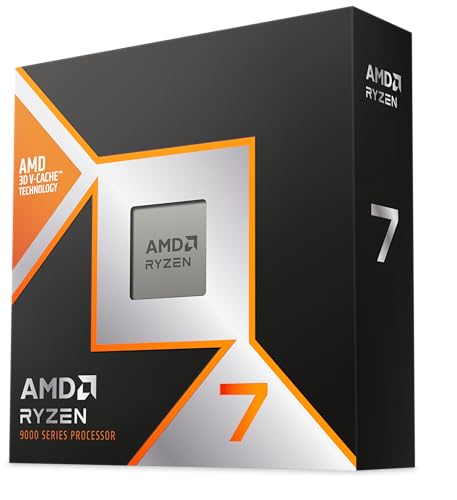
Product A · ASIN B0DKFMSMYK
AMD Ryzen 7 9800X3D
Last observed offer
$444.00 List Price: $479.00
Per listed package.
Offer eligibility must be confirmed on Amazon.
Checked 2026-10-31 13:41 UTC. Price and availability may change.

Product B · ASIN B0BTZB7F88
AMD Ryzen 7 7800X3D
Last observed offer
$366.80 List Price: $449.00
Per listed package.
Offer eligibility must be confirmed on Amazon.
Checked 2026-10-31 15:55 UTC. Price and availability may change.
Pickoryx may earn a commission from qualifying purchases through the paid Amazon links on this page, at no added cost to you.
The buying question
Do the 9800X3D’s results in your games or shader-compilation tasks justify choosing it over the 7800X3D for your build?
TechSpot’s September 2025 comparison reports an 8% average frame-rate lead for the 9800X3D in its 12-game sample, but title-level results vary. It also reports 5%, 14%, and 4% differences in three named game shader-compilation tests. Those percentages describe benchmark results, not time saved, and do not generalize to every game or creator workload.
Quick verdict
Choose AMD Ryzen 7 9800X3D if
- You play games where the cited 9800X3D results are relevant and consider that measured uplift worth the exact current offer difference.
- You care about shader-compilation behavior in the three named tests and treat the reported margins as title-specific benchmark results.
Choose AMD Ryzen 7 7800X3D if
- The 7800X3D’s results are sufficient for your games and the cited gaps do not justify the difference in exact current offers.
- Your decision does not depend on the specific shader-compilation cases reported in the comparison.
When the recommendation changes
- A current test with your games, settings, graphics card, and system changes the result that matters to you.
- The exact current offers or your motherboard and BIOS compatibility change the total build decision.
The differences that matter
Game Frame Rate Fit
AMD Ryzen 7 9800X3D
In TechSpot’s refreshed 12-game sample, the Ryzen 7 9800X3D averaged 8% higher frame rates than the Ryzen 7 7800X3D at both medium and ultra settings. Individual results varied by title and GPU limit.[3]
AMD Ryzen 7 7800X3D
The Ryzen 7 7800X3D was the direct comparator; some tested games showed little difference while others had larger gaps for the 9800X3D.[3]
What this changes: This result is most useful when the buyer’s games and graphics-card setup resemble the review’s test. It is not a promise of an 8% gain in every game or build.[3]
Game Shader Compilation Wait
AMD Ryzen 7 9800X3D
TechSpot reported the 9800X3D ahead in shader-compilation tests for Marvel Rivals (5%), The Last of Us Part I (14%), and Stalker 2 (4%). These are reported benchmark differences, not equivalent percentages of time saved.[3]
AMD Ryzen 7 7800X3D
The 7800X3D was the comparator in those three shader-compilation tests; the reported margins varied by game.[3]
What this changes: A buyer who often waits for shader compilation in these named games can consider the measured direction, while the small and title-specific sample does not establish a general compilation advantage or creator-app result.[3]
Best for your routine
A gaming build where the owner’s games and settings are represented by TechSpot’s tested sample.
Best fit: AMD Ryzen 7 9800X3D
The 9800X3D averaged 8% higher frame rates in the 12-game sample, but title results varied and the benchmark does not guarantee the same gain in another system.
A buyer who often waits for shader compilation in Marvel Rivals, The Last of Us Part I, or Stalker 2.
Best fit: AMD Ryzen 7 9800X3D
The three cited tests reported 5%, 14%, and 4% differences, respectively. These figures are not percentages of time saved and do not establish a general workload result.
Value and trade-offs
One or both observed offers have eligibility conditions, so no unrestricted price difference is shown.
Compare the exact current offers and conditions, then decide whether the game results relevant to your system justify any difference. No current seller or offer-condition comparison is made here.
There is not enough comparable price history here to advise buying now or waiting.
Limitations
- TechSpot published this comparison on September 23, 2025. Its refreshed 12-game sample used an RTX 5090, the latest BIOS for an X870E motherboard, and DDR5-6000 CL30 memory. Results can change with different games, settings, GPUs, software, and system configurations.
- The shader-compilation results cover three named games only. They do not measure general software compilation, creator applications, or time saved in seconds.
- Before a CPU upgrade, check the exact motherboard model and BIOS support for the processor you plan to install.
- No hands-on testing was conducted. Current offer terms and price history were not assessed.
Questions shoppers ask
Does an 8% average mean the 9800X3D is 8% faster in every game?
No. TechSpot’s 8% result is an average across its 12-game sample at the tested settings. The article reports that individual game results varied, including cases with little difference.
Do the shader-compilation percentages mean the 9800X3D saves that much waiting time?
No. The article reports benchmark differences of 5%, 14%, and 4% in three named game tests. Those percentages should not be translated into equivalent waiting-time savings or generalized to other software.
Methodology and sources
Kept the refreshed 12-game frame-rate average separate from the three game-specific shader-compilation tests and retained the source’s test scope. AMD product pages were used to confirm the named processor models.
AI tools assisted with source organization and drafting; no product measurements were conducted by Pickoryx.
View 3 sources
- 1.AMD Ryzen 7 9800X3D Desktop ProcessorAMD · Official specifications · Source checked 2026-10-23 04:04 UTC
Evidence used on this page
- Specifications: Ryzen 9000 Series, boxed part number 100-100001084WOF, AM5 socket, 120W default TDP and cooler guidance.: Identifies the exact 9800X3D boxed processor and its published specifications. Shared AM5/TDP/cooler fields are treated as context, not a performance difference.
- 2.AMD Ryzen 7 7800X3D Desktop ProcessorAMD · Official specifications · Source checked 2026-10-23 04:04 UTC
Evidence used on this page
- Specifications: Ryzen 7000 Series, boxed part number 100-100000910WOF, AM5 socket, 120W default TDP and cooler guidance.: Identifies the exact 7800X3D boxed processor and its published specifications. Shared AM5/TDP/cooler fields are not used as a difference.
- 3.AMD Ryzen 7 7800X3D or 9800X3D, Which Should You Buy?TechSpot · Independent testing · Source checked 2026-10-23 04:04 UTC
Evidence used on this page
- By Steven Walton, September 23, 2025. Updated gaming sample and setup in Benchmarks/12 Game Average; game-specific Shader Compilation section.: Direct test comparison. Reports 9800X3D averaging 8% higher in its refreshed 12-game sample at medium and ultra settings, and shader-compilation test differences of 5%, 14%, and 4% in Marvel Rivals, The Last of Us Part I, and Stalker 2. These are test-specific results, not universal gains or seconds saved.