
Nikon Z6 III vs D7500: What Changes for an F-Mount Owner?
The D7500 is the simpler fit for a photographer who wants to keep using F-mount lenses directly and prefers an optical viewfinder. The Z6 III is the body to consider if you want its electronic viewfinder and vari-angle screen, but F-mount lenses need an FTZ adapter and their autofocus and stabilization behavior must be checked by exact lens model. This is a feature-fit comparison, not a measured camera-performance verdict.
Published by Pickoryx · Published 2026-10-17
Source checked 2026-10-17 01:55 UTC
Products compared

Product A · ASIN B0D77SL8CY
Nikon Z6 III, Black, U.S. model (part 1890)
Last observed offer
$1,996.95 List Price: $2,196.95
Per listed package.
Offer eligibility must be confirmed on Amazon.
Checked 2026-10-19 18:39 UTC. Price and availability may change.
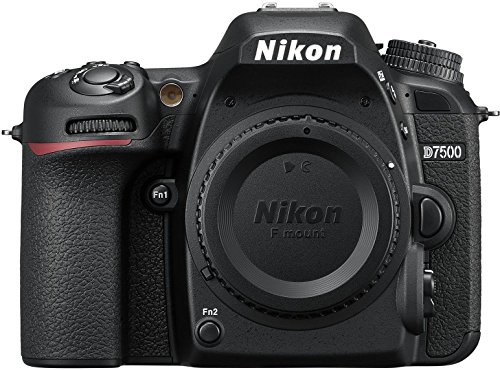
Product B · ASIN B06Y5ZCFHX
Nikon D7500 DX-format DSLR body, U.S. listing part 1581
Last observed offer
$696.95 List Price: $999.95
Per listed package.
Offer eligibility must be confirmed on Amazon.
Checked 2026-10-19 17:39 UTC. Price and availability may change.
Pickoryx may earn a commission from qualifying purchases through the paid Amazon links on this page, at no added cost to you.
The buying question
How do lens mounting, viewfinder type, and screen movement change when moving from a D7500 to a Z6 III?
The D7500 accepts F-mount lenses directly and uses an optical finder; the Z6 III uses Z-mount lenses and an electronic finder, with F-mount lenses requiring an adapter and individual compatibility checks.
Quick verdict
Choose Nikon Z6 III, Black, U.S. model (part 1890) if
- You want the Z6 III's electronic finder and vari-angle screen, and have confirmed the FTZ compatibility of each F-mount lens you plan to keep using.
Choose Nikon D7500 DX-format DSLR body, U.S. listing part 1581 if
- You want to attach Nikon F-mount lenses directly and prefer an optical pentaprism viewfinder with a tilting screen.
When the recommendation changes
- The exact F-mount lens models you own are identified and Nikon's compatibility information confirms whether their autofocus and VR functions meet your needs on the Z6 III.
- Your preference for an optical finder, an electronic finder, a tilting screen, or a vari-angle screen changes after handling both camera types.
The differences that matter
F Mount Lens Transition And Adapter Restrictions
Nikon Z6 III, Black, U.S. model (part 1890)
Nikon Z mount; Nikon says F-mount NIKKOR lenses require an FTZ-series mount adapter and some restrictions apply. The compatibility chart supports autofocus for listed AF-S G/E/D, AF-P G/E, and AF-I D groups; it marks the AF Type G/D group as not supporting autofocus. Exact lens functionality must be checked individually.[1, 3]
Nikon D7500 DX-format DSLR body, U.S. listing part 1581
The D7500 model reference lists a Nikon F mount with AF coupling and AF contacts; F-mount lenses attach directly. Nikon's reference page uses item number 1582, while the U.S. listing being compared identifies part 1581, so it does not establish that listing's package or box contents.[2]
What this changes: The mount change can affect an existing lens kit: D7500 F-mount lenses attach directly to the D7500, while the Z6 III requires FTZ and lens-specific checks for autofocus and VR behavior. The buyer should identify each lens before choosing.[2, 1, 3]
Optical Vs Electronic Viewfinder And Display Workflow
Nikon Z6 III, Black, U.S. model (part 1890)
The Nikon Z6 III page lists a 0.5-inch OLED electronic viewfinder at approximately 5.76 million dots, an eye sensor that switches between finder and monitor, and a 3.2-inch vari-angle touch-sensitive monitor.[1]
Nikon D7500 DX-format DSLR body, U.S. listing part 1581
The D7500 model reference lists an eye-level pentaprism single-lens-reflex optical viewfinder and a 3.2-inch tilting touch-sensitive LCD monitor.[2]
What this changes: The two bodies use different finder technologies and screen movement: choose by the framing and display workflow you prefer, not by an unmeasured claim that one produces better images.[1, 2]
Best for your routine
Keep using F-mount lenses directly without adding a mount adapter.
Best fit: Nikon D7500 DX-format DSLR body, U.S. listing part 1581
Based on listed features, not comparative testing.
The D7500 is the direct F-mount body. The Z6 III can use compatible F-mount NIKKOR lenses only with an FTZ-series adapter, and functions vary by lens type.
Choose an electronic finder and a vari-angle screen as part of a move to the Z-mount system.
Best fit: Nikon Z6 III, Black, U.S. model (part 1890)
Based on listed features, not comparative testing.
The Z6 III has an OLED electronic finder with eye-sensor switching and a vari-angle monitor. This preference does not establish better image quality or autofocus performance.
Value and trade-offs
One or both observed offers have eligibility conditions, so no unrestricted price difference is shown.
A price premium is not assessed here. A move to the Z6 III is justified only if its finder and screen workflow matter to you and the adapter requirements work with the lenses you intend to keep.
Current offer and historical price information are not included, so this comparison gives no price-timing guidance.
Limitations
- Nikon's D7500 reference identifies the model but shows item number 1582; the U.S. D7500 listing is identified as part 1581. Confirm the exact listing and box contents before buying.
- For each F-mount lens you plan to use, check Nikon's compatibility chart for the autofocus and VR functions you need. Lens support varies.
- The cited specifications do not establish comparative image quality, autofocus speed, low-light results, finder preference, or reliability.
- No current offer or price-history recommendation is included.
Questions shoppers ask
Can every D7500 F-mount lens be used on the Z6 III with autofocus?
No blanket promise is supported. Nikon says F-mount NIKKOR lenses need an FTZ-series adapter, and its chart shows autofocus for certain AF-S, AF-P, and AF-I lens groups but not for the AF Type G/D group. Check the exact lens entry and the functions you need before switching.
Does a D7500-to-Z6 III move preserve the same VR behavior?
Not necessarily. Nikon's FTZ guide says VR behavior depends on the lens and that Synchro VR is not supported through the adapter. Check Nikon's entry for the exact lens; this comparison does not test stabilization results.
Is an FTZ adapter included with the Z6 III listing?
This comparison does not verify the contents of the selected retail package. Nikon's compatibility guidance says an adapter is required to mount F-mount lenses on the Z6 III; check the exact seller's box contents before ordering.
Methodology and sources
Compared Nikon's model-level mount, viewfinder, monitor, and FTZ lens-compatibility information. No specific F-mount lens or retail-box contents were assumed.
AI assistance organized the cited specifications into conditional buying guidance. Pickoryx did not conduct hands-on testing of either camera.
View 3 sources
- 1.Nikon Z6III Mirrorless Camera | Specs & FeaturesNikon Imaging USA · Official specifications · Source checked 2026-10-17 01:55 UTC
Evidence used on this page
- Tech Specs: monitor, viewfinder, lens mount, and lens compatibility: Nikon's Z6 III page lists a Nikon Z mount; F-mount NIKKOR lenses require an FTZ-series adapter and restrictions may apply. It also lists an OLED electronic finder with eye-sensor display switching and a vari-angle touch monitor.
- 2.Nikon D7500 DSLR | 20.9 MP DX Format Digital SLR CameraNikon Imaging USA · Official specifications · Source checked 2026-10-17 01:55 UTC
Evidence used on this page
- Tech Specs: Type, Lens Mount, Viewfinder, Monitor Type: Nikon's D7500 product page lists the model's F mount with AF coupling and contacts, pentaprism optical finder, and tilting touch LCD. The page identifies item 1582; it does not confirm the contents of the U.S. listing identified as part 1581.
- 3.The FTZ II/FTZ Mount Adapter: Compatible F Mount LensesNikon · Official support · Source checked 2026-10-17 01:55 UTC
Evidence used on this page
- pp. 1–2 supported-features table; p. 9 On-Camera Vibration Reduction: Nikon's guide groups F-mount lenses by autofocus support and explains lens-dependent VR use. It says FTZ does not support Synchro VR.